

 Naturae
2026 (7) - Pages 129-151
Naturae
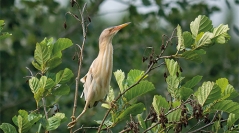
2026 (7) - Pages 129-151Evaluate conservation status and issues of species require a precise knowledge of the distribution, population size, documented threats, and past population trends. However, the exhaustivity of this information can be difficult to reach when it concerns sensitive and inaccessible area, also when the monitoring effort is limited by ethical rules or experts’ availability. Filling the gaps and eventual limits of current protocols is possible by the evaluation of the complementarity of the monitoring tools and specific knowledge of the target species. Among the available monitoring tools, we are interested in bioacoustics. Will the combination of life science (biology) and sound engineering (acoustics) be the new assistant to ecologists, particularly ornithologists? Through this article, we suggest a critical view of the bioacoustics approach summing up the advantages and limits for field surveyors, or naturalists involved in the monitoring of discreet species. Our thought is based on the feedback of the Little Bittern (Ixobrychus minutus Linnaeus, 1766) breeding survey, in the reedbed of Printegarde (07); where we investigated if the combination of bioacoustic tools and ornithologist’s expertise allow to monitor the breeding of an inconspicuous and sensitive species with few disturbances on its vital area. A classical survey approach requires a repeated human presence within or near the reedbed hoping to collect enough breeding evidence. However, in the case of a protected and endangered species in scarce and sensitive habitat, it is important to reduce as much as possible the disturbance risk. That is why the passive acoustic approach is a solution, because it allows to increase the monitoring effort while minimize the human presence within the area. Nonetheless, the data treatment can be time-consuming if it is done manually, limited if it is carried by automatic process commonly used by engineering firm or requiring specific skills in biostatistics tools such as R and Python. For the full understanding of the bioacoustics tool by field actors, it will be interesting to develop an easy access pedagogic platform including a large labelled species songs catalog to cover a maximum of environmental context and population studied. Even if bioacoustics is not a miracle yet, it is a promising tool when it is combined to the expertise of ornithologist and offer an interesting perspective for the monitoring of discreet species (for example: Nightjars or nocturnal raptors), in various environmental context (quarry cliff, forest…).
Passive acoustic monitoring, ornithology, environmental impact assessment, acoustic monitoring protocol