

 Comptes Rendus Palevol
25 (21) - Pages 391-416
Comptes Rendus Palevol
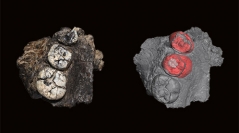
25 (21) - Pages 391-416Early hominin juvenile fossils are key for elucidating the developmental basis of adult phenotypic variation and enhancing our understanding of phylogenetic relationships. Since the discovery of the Taung child a century ago, numerous findings have expanded our knowledge concerning craniodental ontogeny of Australopithecus africanus and A. afarensis, and more recently, Paranthropus robustus. However, less is known about the derived, robust species P. boisei from eastern African. In this study, we present a juvenile maxilla specimen of P. boisei recently recovered from the Shungura Formation (Ethiopia), offering insights into the craniodental development of eastern African robust hominins. To give an age at death, the dental developmental stage was studied and compared to those of P. robustus individuals. We then examined the expression of derived morphological features, comparing them to those observed in various published fossils, in order to explore the craniofacial ontogeny of the genus Paranthropus. Our results show that OMO 362-10001 age at death is estimated to have been around 3.8 to 5 years old. The OMO 362-10001 maxillary morphology indicates that some of the derived features shared by species of the genus Paranthropus are already evident by this stage of development while others are not. This present ontogenetic pattern differs in some way from that of P. robustus, suggesting ontogenetic variation within the clade Paranthropus.
This article has undergone a dual peer-review, initially by PCI Paleontology (recommendation https://doi.org/10.24072/pci.paleo.100403), and subsequently by the Comptes Rendus Palevol.
Fossils, robust hominins, facial morphology, dentition