

 Comptes Rendus Palevol
25 (17) - Pages 307-317
Comptes Rendus Palevol
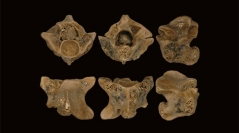
25 (17) - Pages 307-317Although snakes in Europe achieved an extreme and fascinating diversity during the Cenozoic, particularly during the Eocene, their Paleocene fossil record in the continent is very scarce and inadequately known, consisting of only a very few isolated and incomplete remains that have been described from only three localities. We here document snake vertebrae from the late Paleocene (MP 6) of Cernay, Paris Basin, France. Even if rather limited, the Cernay material reveals the presence of two different taxa: one with potential affinities with the genus Dunnophis Hecht in McGrew et al., 1959 and a second, indeterminate, morphotype of a larger constrictor. A discussion and evaluation of the diagnostic features and the geographic and stratigraphic distribution of the genus Dunnophis is presented. The new Cernay material adds to our poor knowledge of Paleocene European snakes, but also of the coeval herpetofaunas in general.
Serpentes, Constrictores, Dunnophis, vertebral morphology, Paleogene